As we look toward the 2030 horizon, in this article we are going to take a moment to reflect on what all this “automation” is actually for. Our team have spent our careers so far watching technology promise to “save time,” only for us to fill that time with even more emails or processes. But as we head downhill toward the end of this decade, we are, we believe, finally seeing a shift that actually sticks: the rise of the Human-Centric SME.
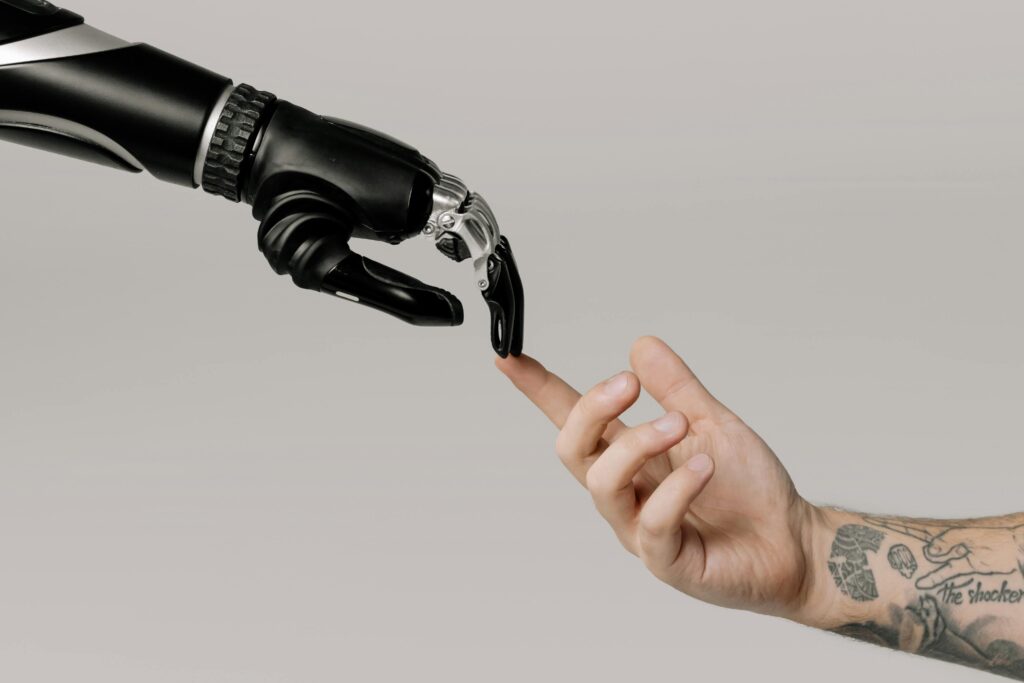
By 2030, the most successful firms won’t be the ones with the most AI; they’ll be the ones that used AI to become more human. By leveraging platforms like DocuWare for active document intelligence and Agentic AI for operational tasks, we are finally decoupling revenue from headcount and this means you can now scale your businesses without scaling the stress, the admin, or the burnout.
Technology is best at handling the mundane so humans can handle the meaningful.
For instance, we are moving toward a world of 24/7 autonomous support, where AI agents grounded in your company’s specific data can resolve 90% of customer queries instantly, meaningfully and accurately. This isn’t about getting rid of customer service teams altogether; it’s about freeing them from repetitive questions so they can handle the personal, complex, empathetic conversations that a machine never will – it’s about making your team MORE personal.
The “SME of 2030” will also be a leader in sustainability, it will champion environmental responsibility, it will deliver in a very personal way. We’ll be meeting our ESG goals through automated lifecycle management, which optimises our cloud storage and automatically deletes obsolete files to reduce our digital carbon footprint. Many boards are already linking IT modernisation with environmental metrics, recognising that efficiency and responsibility go hand-in-hand.
At every level, technology is and must be about people.
If there’s one thing we’ve learned, it’s that the best technology is invisible. It’s the layer that connects our people, processes, and decisions in real-time, allowing us to focus on the “craft” of our business. The future of document management isn’t about finding files; it’s about enabling people.
The risk as we head into the late 2020s isn’t adopting AI too early; it’s waking up in 2030 and realising you spent the last five years managing paperwork while your competitors spent them managing relationships. The future is bright, it’s automated, and most importantly, it’s human.
Let’s build your 2030 roadmap. Don’t wait for the future to happen to you – shape it. Reach out to us today to start your ‘Strategic 2030 Planning’ session, and let’s ensure your business is at the forefront of the human-centric automation revolution.
Featured image by Tara Winstead: https://www.pexels.com/photo/robot-pointing-on-a-wall-8386440/